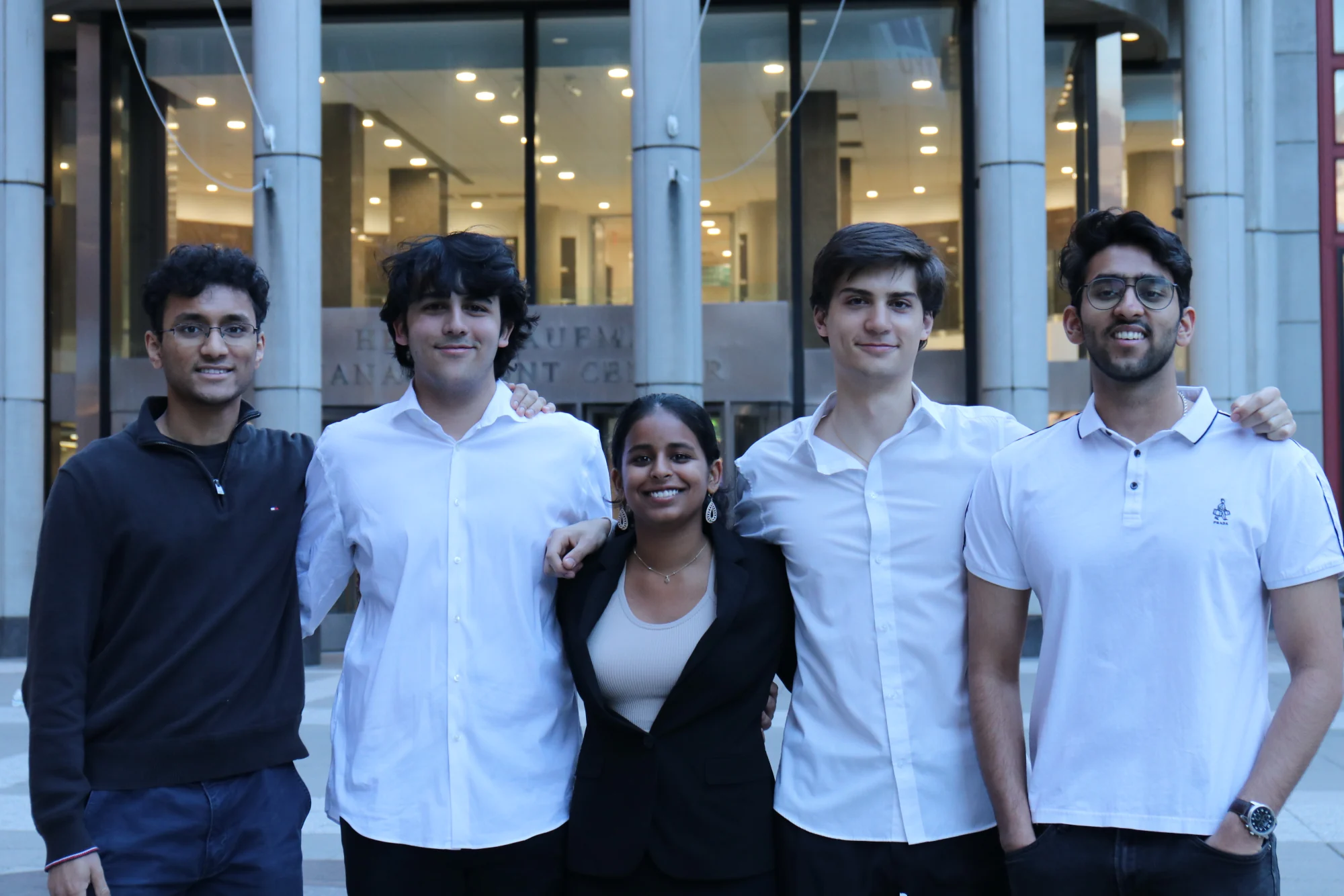
Over the course of 9 weeks, startup team support students through an entrepreneurial pursuit of their choice. Students pick a problem space, find co-founders, build a product, and take it to market. Designed to go beyond ideation and hypothesis, startup team pushes students to stumble, falter, and learn through real-world experience.
Curriculum
Entrepreneurship is a fluid, iterative process, so startup team's 9-week curriculum is built to adapt as each project develops. While individual journeys won't follow linear milestones, there are three general phases teams strive to reach over the course of the semester: ideation, production, and go-to-market.
In the ideation phase, teams will learn the fundamentals of uncovering market gaps. Students will dive into useful methods, frameworks, and heuristics for understanding customers and problems. If done right, teams will uncover true user pain and understand their ideal customer. The goal of this phase is to seed the conviction behind what ultimately gets built in production.
In production, teams begin working on their products. For the vast majority of projects, this means leveraging coding agents to build solutions informed by phase one. AI tools have dramatically increased the scale and speed at which teams can prototype. And a 9-week calendar is plenty of time to build out a high quality software product.
If a project makes it far enough, it will eventually become time for go-to-market. From bothering students in Bobst to building out an SEO motion to creating user-generated content, there are infinitely many ways to make a sale. Ultimately, what this phase aims to demonstrate is that the ultimate test of your work is none other than the real world.
To be clear, while these three phases are distinct, they are not independent. Customer conversations during go-to-market might reveal that a feature is confusing, unnecessary, or missing entirely. And new technical constraints uncovered during production might force teams to rethink assumptions they made during ideation.
The curriculum we've designed is intentionally hard and ambiguous, but it is also deeply rewarding. Many students find tremendous joy in the process and choose to continue working on their projects or find work as startup operators.
Goals
In concrete terms, startup team aims to accomplish the following three goals:
- Students become passionate about their projects and choose to continue working on them upon completion of the program.
- Regardless of whether students continue working on their projects, they should know by the end of the semester whether they think working in startups or founding a startup is something they would genuinely enjoy.
- Regardless of whether students want to eventually work at a startup, they should better understand what operators do, how they think, and how they execute.
For the students who would genuinely enjoy working in startups, the program should leave them with more questions and ideas. For example, they should have a better idea of what to look for in a co-founder or new ideas they want to test out. For those who might not be as interested in startups as they first thought, a great outcome would be to discover what kind of role they might be more suited to. For example, perhaps the go-to-market phase spikes an interest in marketing or the production phase spikes an interest in engineering.
If these goals align with your passions and professional interests, startup team may be a strong fit for you.
Logistics
Some important information:
There are three phases to the application process: a written application, behavioral interview, and technical interview.
For the Fall 2026 semester, applications open on Monday, September 21st and close on Saturday, September 26th at 12:00 PM EST.
We do not expect students to have coding, design, or any other technical skills before the start of the semester. The technical interview primarily tests students' ability to learn quickly and think through ambiguous problems.
We expect students to commit 15 hours per week to startup team.
All freshmen, sophomores, and juniors at NYU across all schools are eligible to apply.
All students apply as individuals to the semester's startup team cohort. After the program begins, students are welcome, but not forced, to form teams among students in the cohort.


